World Environment Day 2026: Heat is invisible, but its impact is not
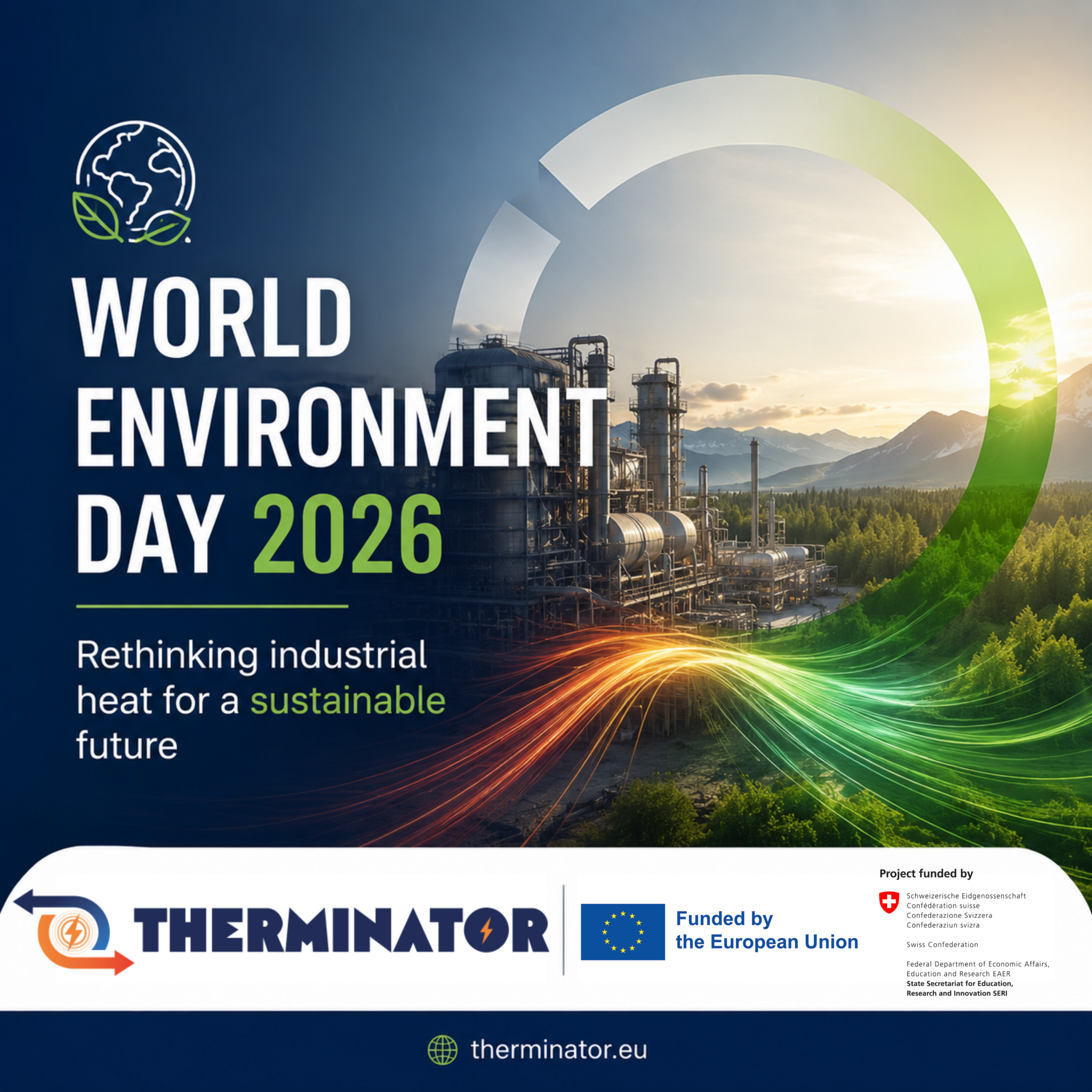
A global reminder of the urgency to decarbonise industry
World Environment Day 2026 is a reminder that environmental responsibility is no longer optional for industry – it is a core requirement for long-term competitiveness and resilience.
Every system we power, every material we process, and every degree of heat we generate carries an environmental footprint. As climate targets tighten and industrial transformation accelerates, the central question is no longer whether decarbonisation is necessary, but how fast and how effectively it can be achieved.
In this context, innovation is not just a driver of progress—it is the mechanism through which climate responsibility becomes operational reality.
Thermal energy efficiency: a critical but often overlooked lever
In THERMINATOR, we focus on one of the most underestimated dimensions of industrial decarbonisation: thermal energy efficiency.
While electrification and fuel switching are often at the centre of climate strategies, thermal processes remain fundamental to most industrial value chains. At the same time, they are also a major source of avoidable energy losses, particularly in heat generation, distribution, and recovery systems.
Improving how heat is managed at system level therefore represents a significant opportunity to reduce energy consumption and associated emissions without compromising industrial performance.
Rethinking how industrial heat is generated, used, and recovered
THERMINATOR is advancing smarter approaches to industrial thermal energy use, with a focus on improving efficiency across the full lifecycle of heat in industrial systems.
The project aims to:
- Reduce energy losses in industrial thermal processes through improved design and optimisation
- Lower environmental impact while maintaining or improving performance standards
- Enable more circular and resource-efficient production systems through enhanced heat recovery and reuse
This approach shifts the perspective on heat from a necessary by-product of industrial activity to a resource that can be actively managed and optimised.
Decarbonisation as a systems challenge
Industrial decarbonisation is often framed in terms of technology substitution—replacing fossil fuels with cleaner alternatives. However, achieving deep and lasting emissions reductions requires a broader systems perspective.
Energy efficiency, particularly in thermal systems, plays a foundational role in this transition. Even incremental improvements in heat management can translate into substantial reductions in overall energy demand when applied across industrial sectors.
By focusing on thermal efficiency, THERMINATOR contributes to reducing emissions at their source, complementing broader decarbonisation strategies.
Making efficiency visible
Heat is often invisible in industrial systems – but its impact is not.
On World Environment Day 2026, the message is clear: meaningful decarbonisation depends not only on changing energy sources, but also on improving how energy is used.
Thermal energy efficiency is one of the most powerful—and often underutilised – levers in that transformation.