Did you know? #4 – Cooling systems can account for up to 30% of a standard data centre’s total electricity consumption
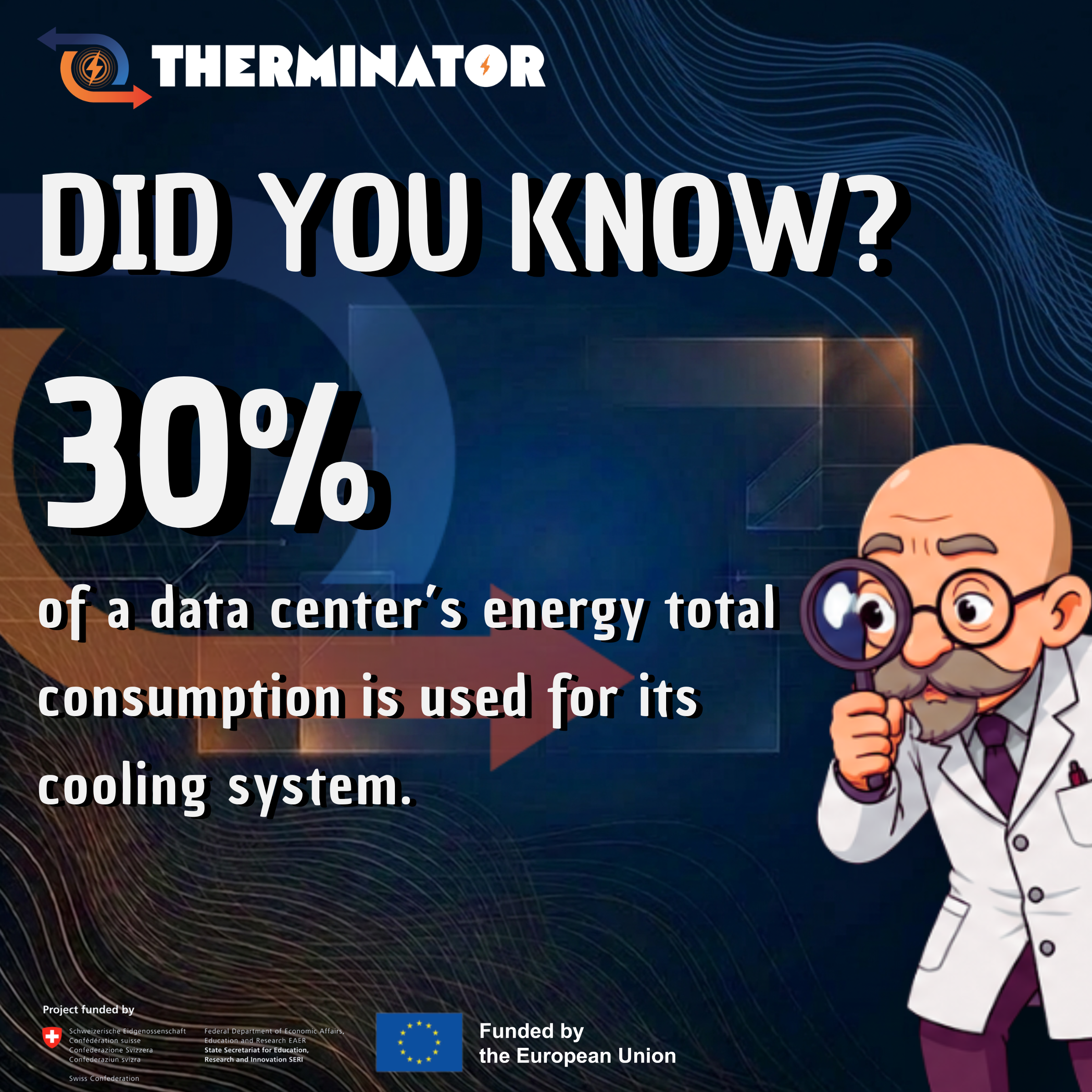
According to a paper published in the Journal of Systems Architecture, cooling systems can account for up to 30% of a standard data centre’s total electricity consumption.
Data centres are the core of our digital world. Every online search, video stream, cloud storage operation, upload or artificial intelligence demand goes through servers, processing and exchanging gigantic amounts of data every second worldwide. While this digital infrastructure has become essential to modern life, it comes with an important challenge: heat management.
As servers operate 24h/24, 7d/7 , they generate large amounts of heat, that must be removed to maintain safe operating temperatures and not compromise the efficiency of their components. Without adequate cooling, equipment performance can decrease, hardware can degrade more quickly, and critical systems may crash or even fail. As a result, cooling has become one of the largest energy expenses for data centre operators worldwide.
This creates a double challenge. Not only does cooling require considerable amounts of electricity, but the heat generated by these facilities is often wated, meaning released into the environment without being used, representing a significant loss of energy.
How can this situation be improved?
As Albert Einstein famously said: “If you always do what you always did, you will always get what you always got.”
This quote perfectly shows the need for innovation in thermal management.
This is where THERMINATOR comes in.
THERMINATOR is developing innovative thermal management technologies designed to cool down the devices and systems to which it is attached. Applied to data centre infrastructures, THERMINATOR could help reduce the energy required for cooling, while maintaining the best operating conditions for servers and electronic components.
Furthermore, THERMINATORs ambitions go even deeper.
In the long term, THERMINATOR also aims to recover excess heat and convert part of it into usable energy. Rather than allowing this energy to be wasted, it could become a valuable resource capable of contributing to the facility’s energy need, green energy.
By both reducing cooling requirements and valorising excess heat, THERMINATOR could help transform data centres into more energy-efficient and sustainable infrastructures. Less wasted energy, reduced operating costs, and the potential production of green electricity : making it a “2 birds 1 stone” situation.
Now you know!
See you next time for another “Did you know”!