Did you know? #1 – Why heating and cooling account for half of Europe’s energy use
Did you know?
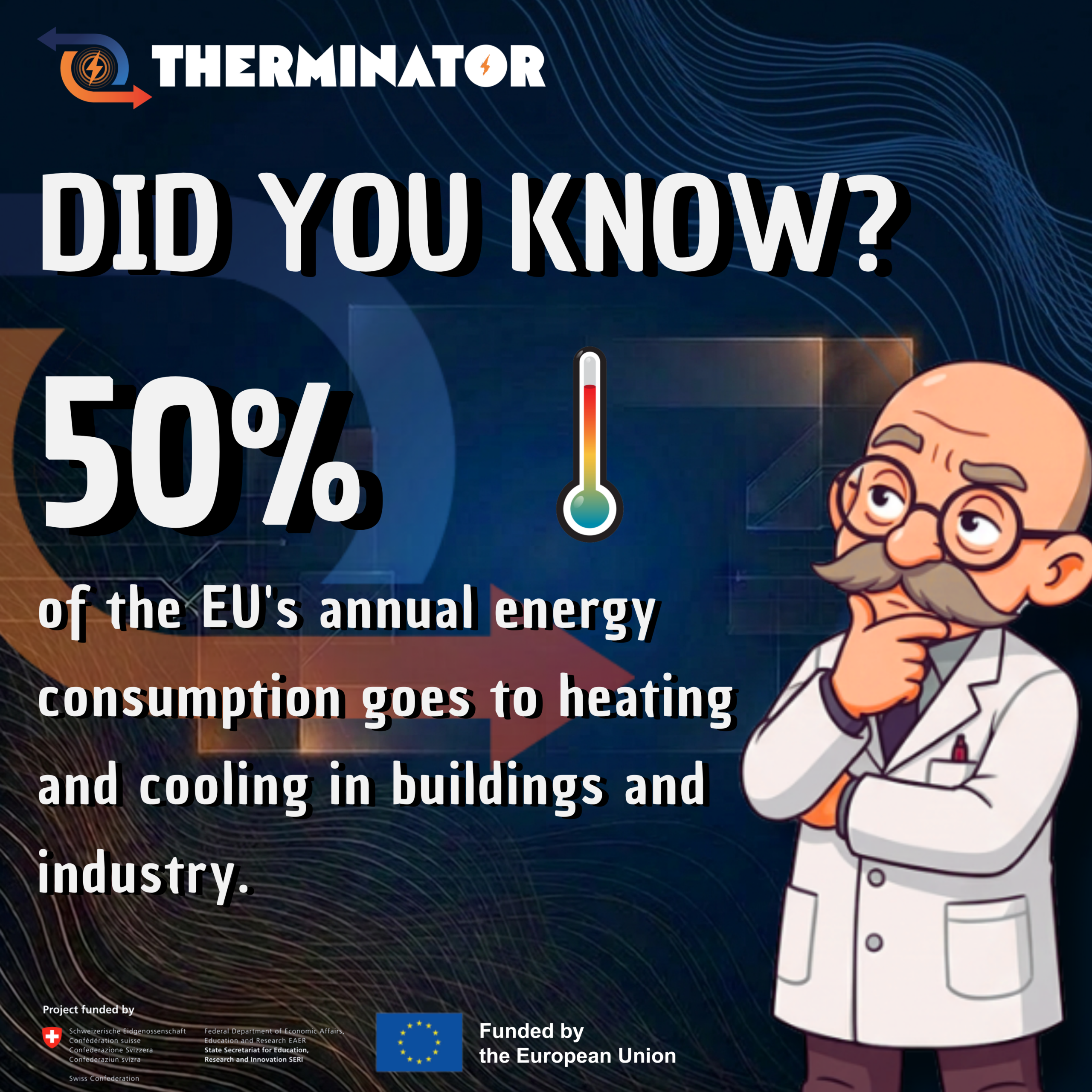
According to the European Commission, nearly 50% of the European Union’s annual energy consumption is used for heating and cooling across buildings and industry. This makes thermal management the largest energy end-use sector in Europe.
Such massive energy demand and consumption come with considerable environmental and economic costs. In fact, cooling systems alone already represent a growing share of global electricity consumption, especially as urbanisation and rising temperatures continue to increase, cooling as well needs requires an increase worldwide.
This leads to big energy expenses (2.8 Tons Oil Equivalent), that, honestly, could easily be avoidable.
How can part of this energy use be significantly reduced?
One of Thomas Edison’s mottos was “There’s a way to do it better – find it”.
Let’s browse then, right? Well, no need to, here is the way.
This is where THERMINATOR comes in.
THERMINATOR focuses on innovative thermal management solutions, as it is designed to cool down the devices and systems it is attached to more efficiently.
By improving cooling performance and reducing the energy required by “conventional” cooling processes, the THERMINATOR project aims to help reaching a more sustainable and energy-efficient approach to thermal regulation and management.
Beyond cooling, THERMINATOR also explores future possibilities for energy recovery. One of the project’s long-term goals is the potential conversion of excess heat into usable electricity.
Instead of letting thermal energy go to waste, this approach could help transform heat into energy, further supporting greener and smarter energy systems Europe-wide.
As the cooling demand continues to rise globally, developing innovative technologies for efficient thermal management is becoming increasingly important for the energy transition and for reducing overall energy consumption, if we don’t want to spend more in it 20 years from now.
Now you know!
See you next time for another “Did you know”!