Did you know? #3 – The average electricity price in the EU was €0.2896 per kWh in 2025
Did you know?
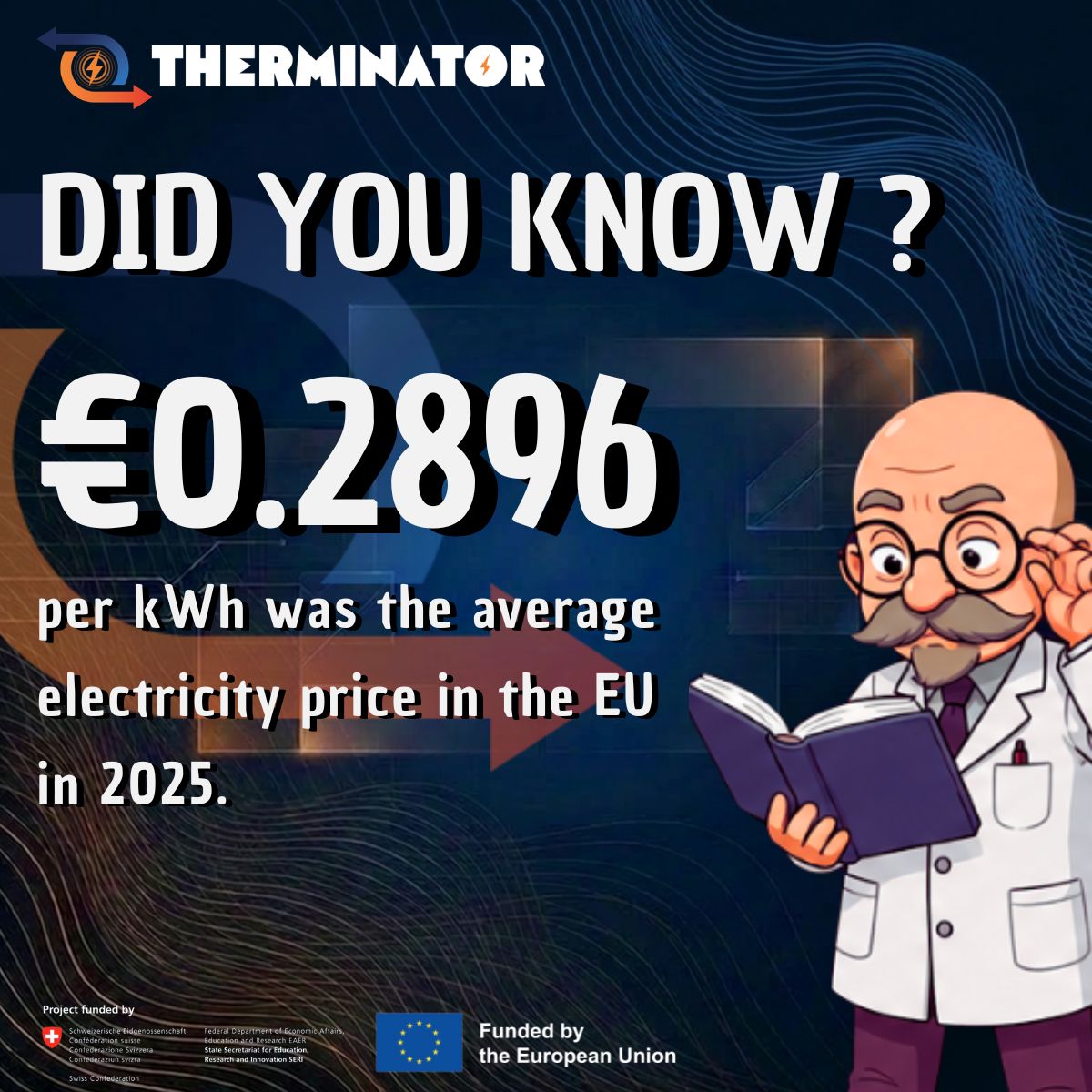
According to the European Commission, the average electricity price for household consumers in the European Union reached €0.2896 per kWh in 2025.
Combined with an average annual household electricity consumption of around 3,600 kWh, this represents an electricity bill of a bit more than €1,000 per year for the average European household. While prices naturally change depending on the country, the overall remains the same: energy is a significant and unnecessary expense for both citizens and businesses.
Part of this cost can be explained by the energy loss occurring throughout the many processes that power our daily lives, like heating for example. Whenever electricity is used, a portion of it is converted into waste heat. It is not used and dissipates into its environment, representing a loss of potentially valuable energy.
This raises an important question: how can we reduce these losses and make better use of the energy we already produce, allowing to save money at the same time ?
Benjamin Franklin once said:
“Beware of little expenses; a small leak will sink a great ship.”
The same principle applies to energy. Small losses may seem insignificant individually, but when multiplied across millions of households, buildings, and industrial facilities, they represent gigantic amounts of wasted energy and money.
This is where THERMINATOR comes in.
As you may already know, THERMINATOR focuses on innovative thermal management solutions designed to cool the devices and systems to which it is attached. By helping regulate temperatures and reduce excess heat, the project aims to improve energy efficiency and limit unnecessary energy losses.
But THERMINATOR’s ambitions go even further.
In the long term, the project also explores the possibility of recovering excess heat and converting part of it into usable electricity. Instead of allowing thermal energy to be wasted, THERMINATOR seeks to transform it into a valuable resource that could contribute to powering future systems more efficiently.
By reducing wasted energy and making better use of excess heat, THERMINATOR could help lower overall energy consumption, thus reducing those costs for citizens and industries, and support Europe’s transition toward a more sustainable energy future.
More savings, less wasted energy, and more carbon-free electricity : a smarter use of the resources we already have.
Now you know!
See you next time for another “Did you know”!